A junk truck priced before anyone picks up the phone.
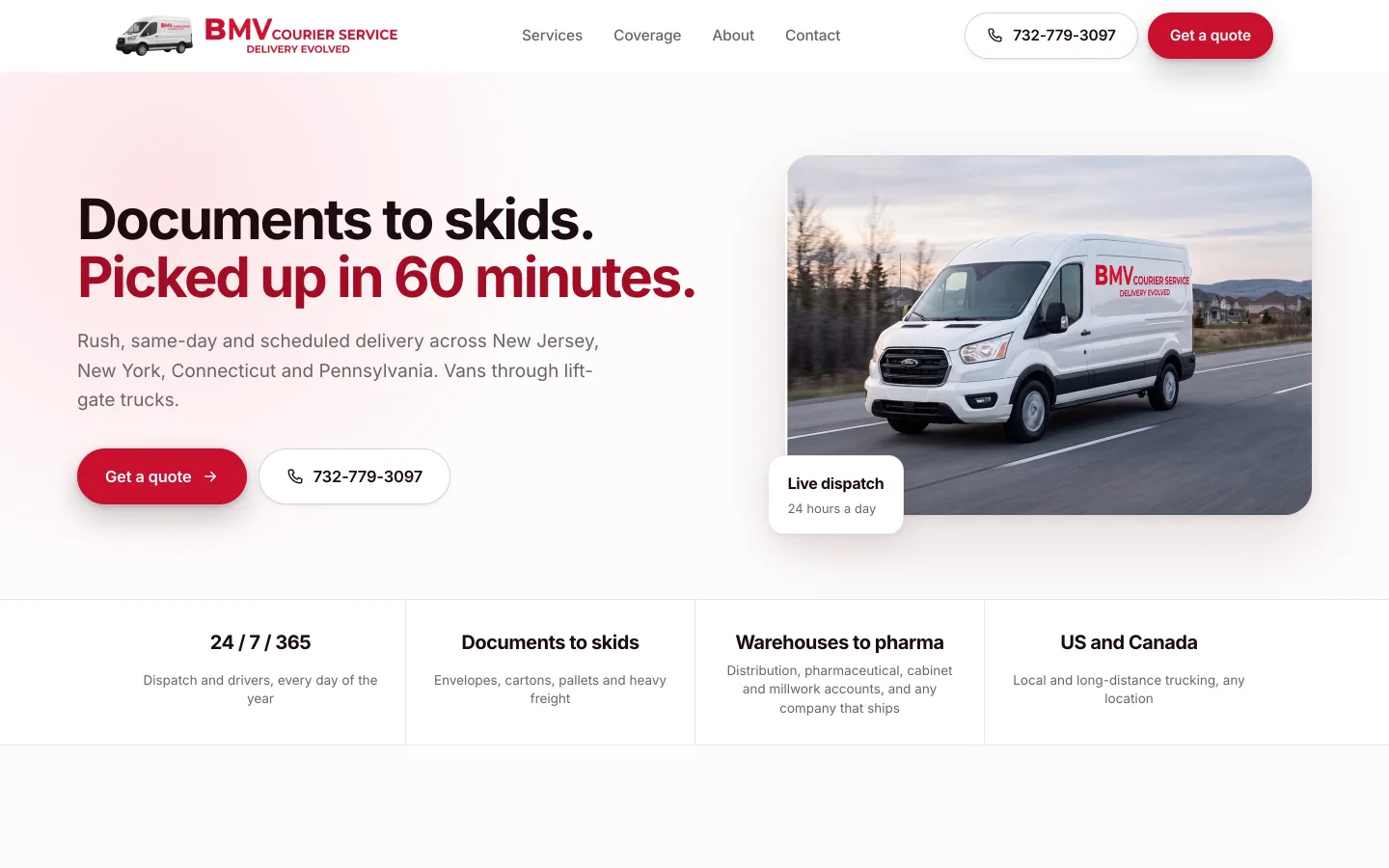
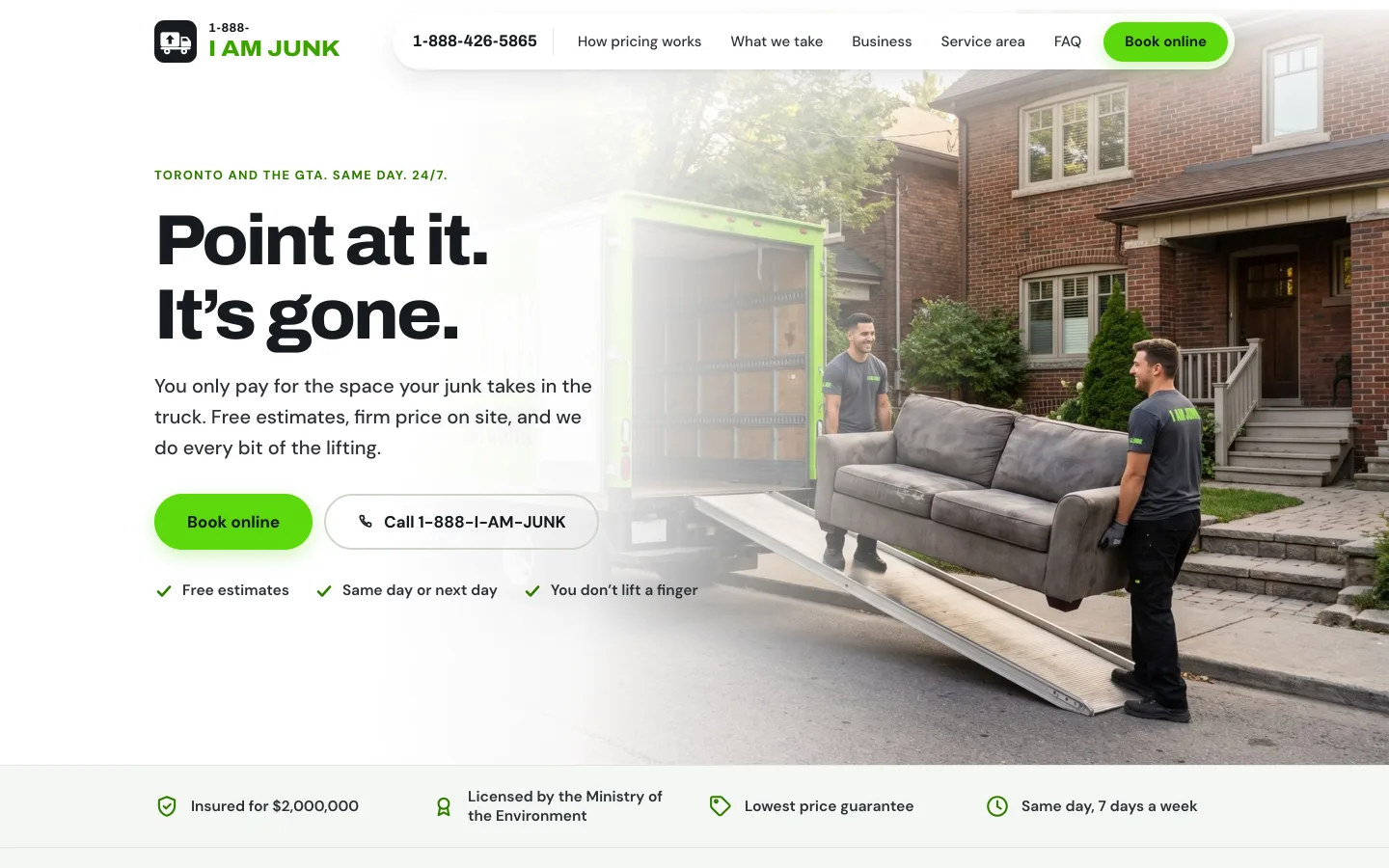
I Am Junk clears basements, garages and job sites across Toronto and forty-three surrounding municipalities. The site it replaced was a 2015 WordPress theme where every price was a phone call. This one fills the truck on screen, prices the load, and carries that load into the booking form.
Open iamjunk.vercel.app ↗


Live demo
Fill the truck yourself.

Real site. Click around.
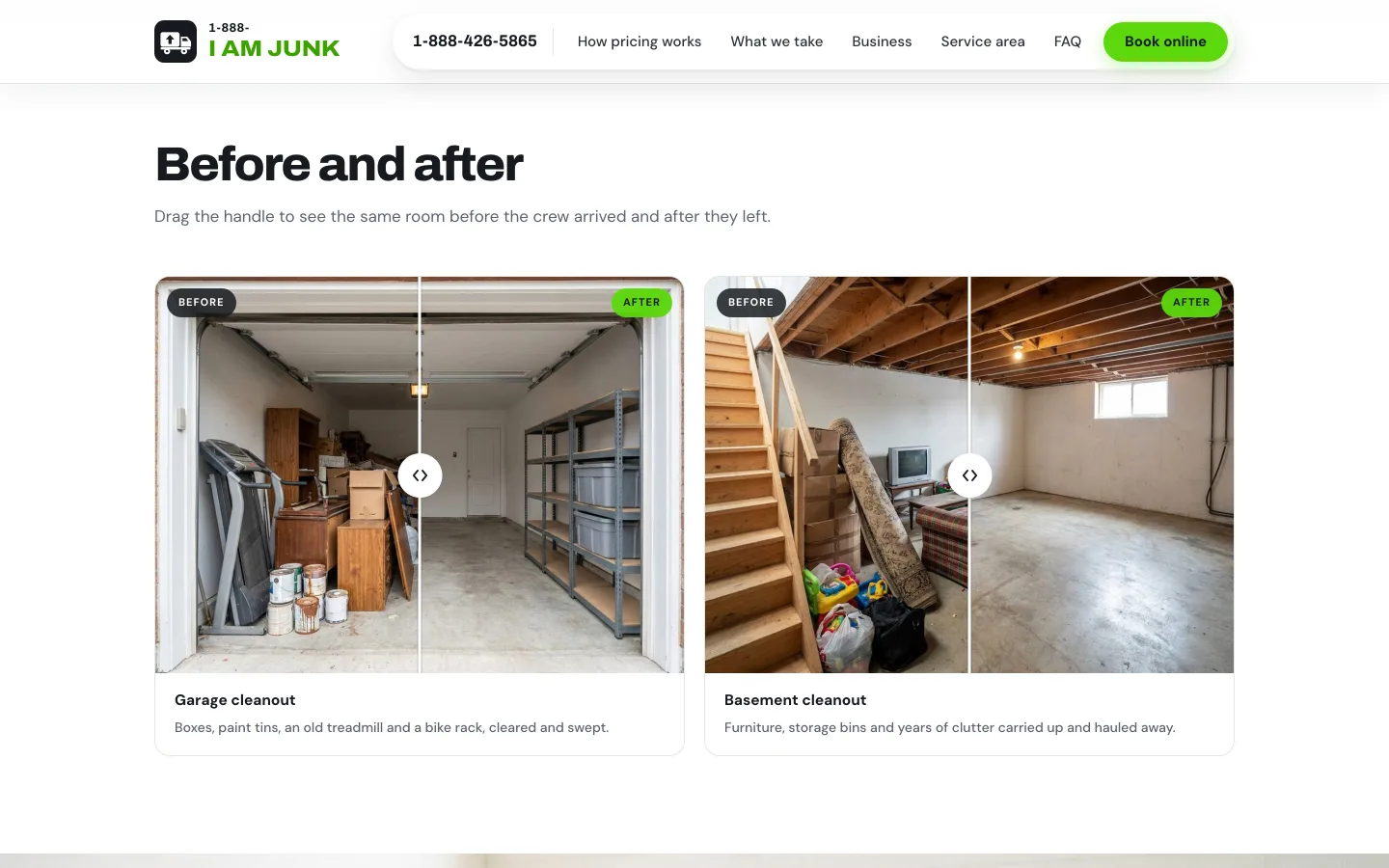
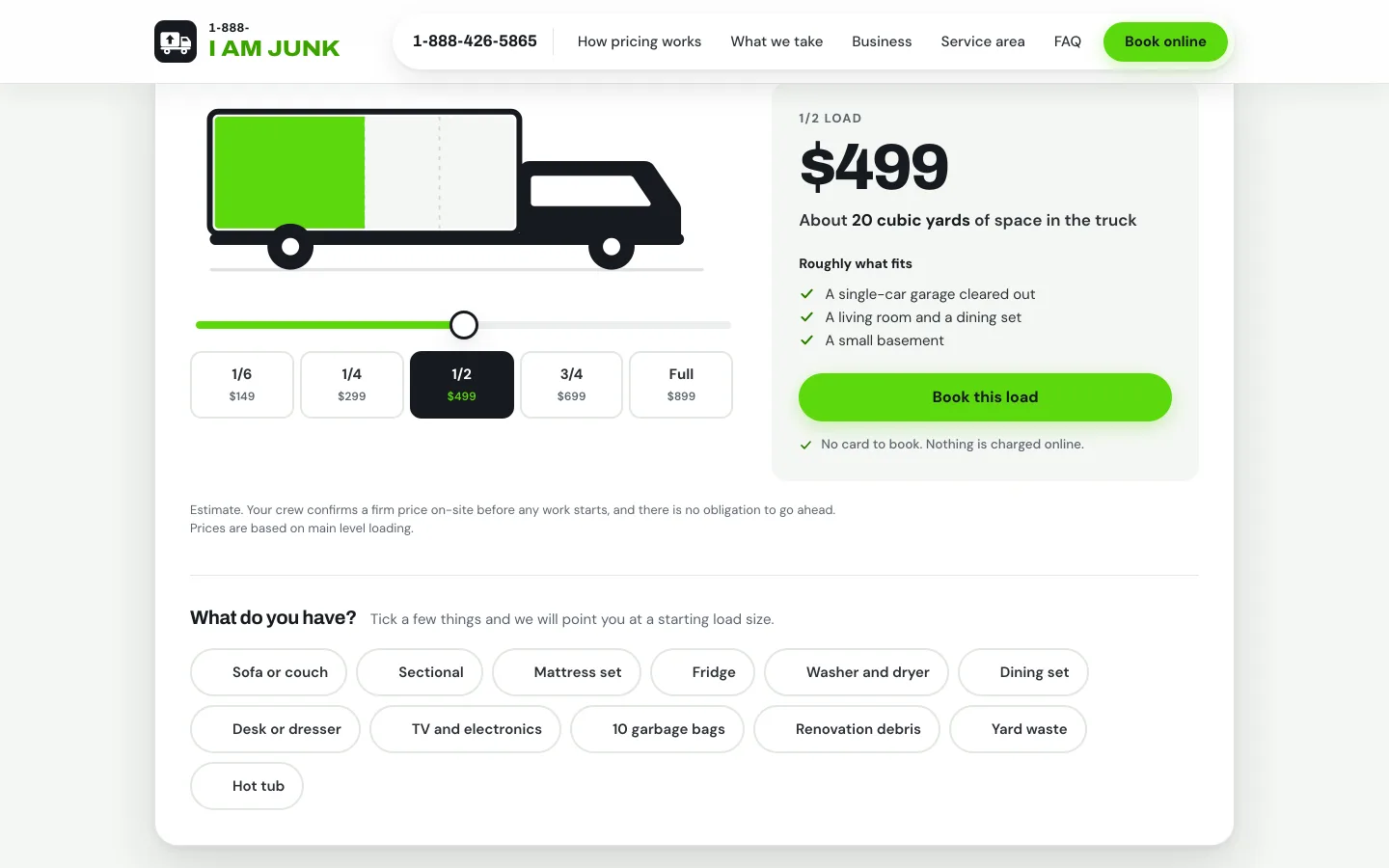
This is the real site, live inside this page. Drag the slider until the truck on screen looks like the pile in the garage. The price, the cubic yards and the list of what actually fits all move with it.
The problem
A theme from 2015, and a price you had to ask for.
The site being replaced was a decade-old WordPress build on a page-builder theme: slow on a phone, hard to read in daylight, and arranged so that the only way to learn a price was to call and describe your pile out loud.
Junk removal is bought in the twenty minutes after somebody decides the garage is finally happening. If the number is not on the screen, the next tab has it.
What we built
Price it, then book it.
- A truck-fill estimator across five load fractions of a forty cubic yard truck, $149 to $899
- Cubic yards and a plain description of what fits, updating live as the slider moves
- A what-do-you-have item picker that adds up the volume and suggests the smallest tier that holds it
- A dense-material note that only appears for renovation debris, because that load is priced by weight
- The chosen tier carried into the booking form, preselected, beside a live summary card
- Canadian postal-code validation, answers saved as they are typed, and a mailto fallback
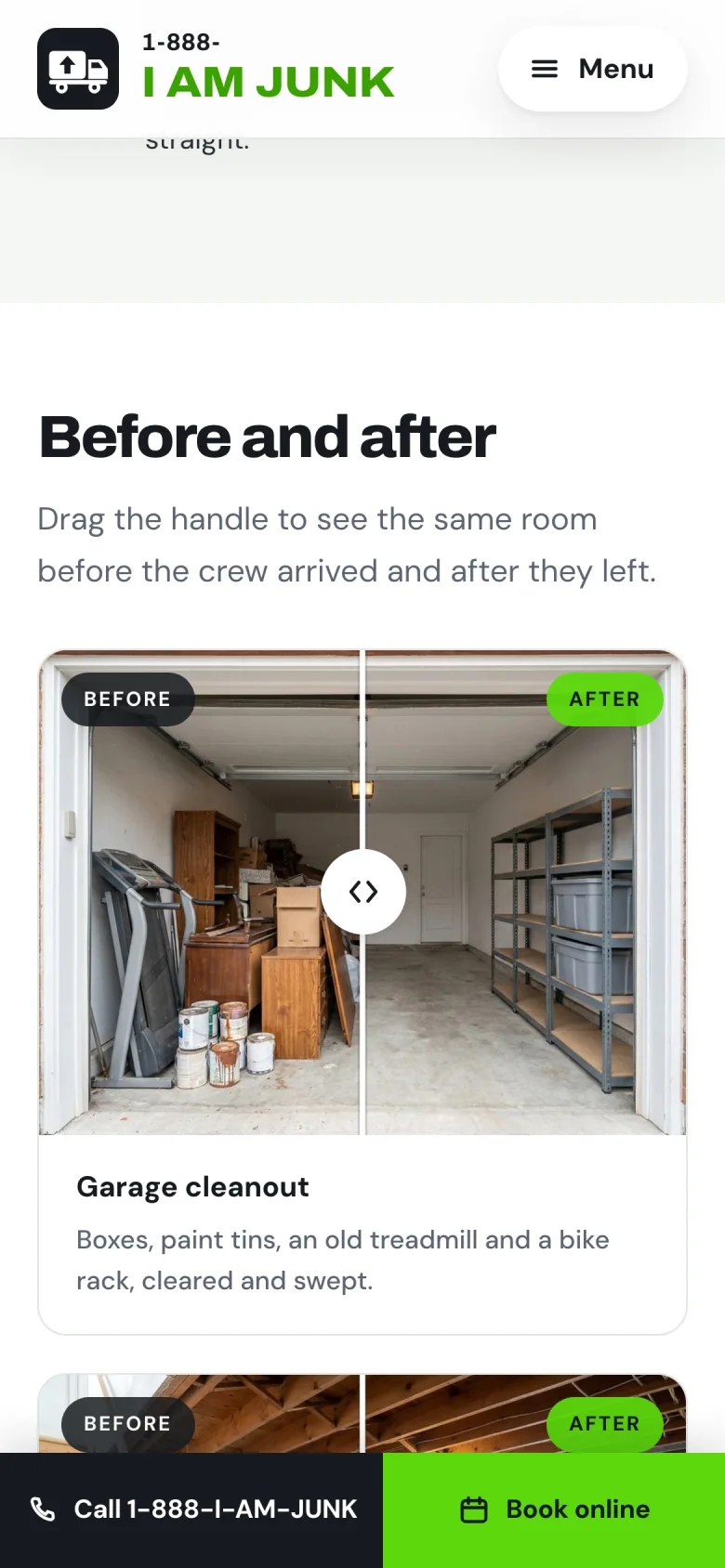
- Before and after sliders that work from the keyboard, and photo previews that never leave the phone
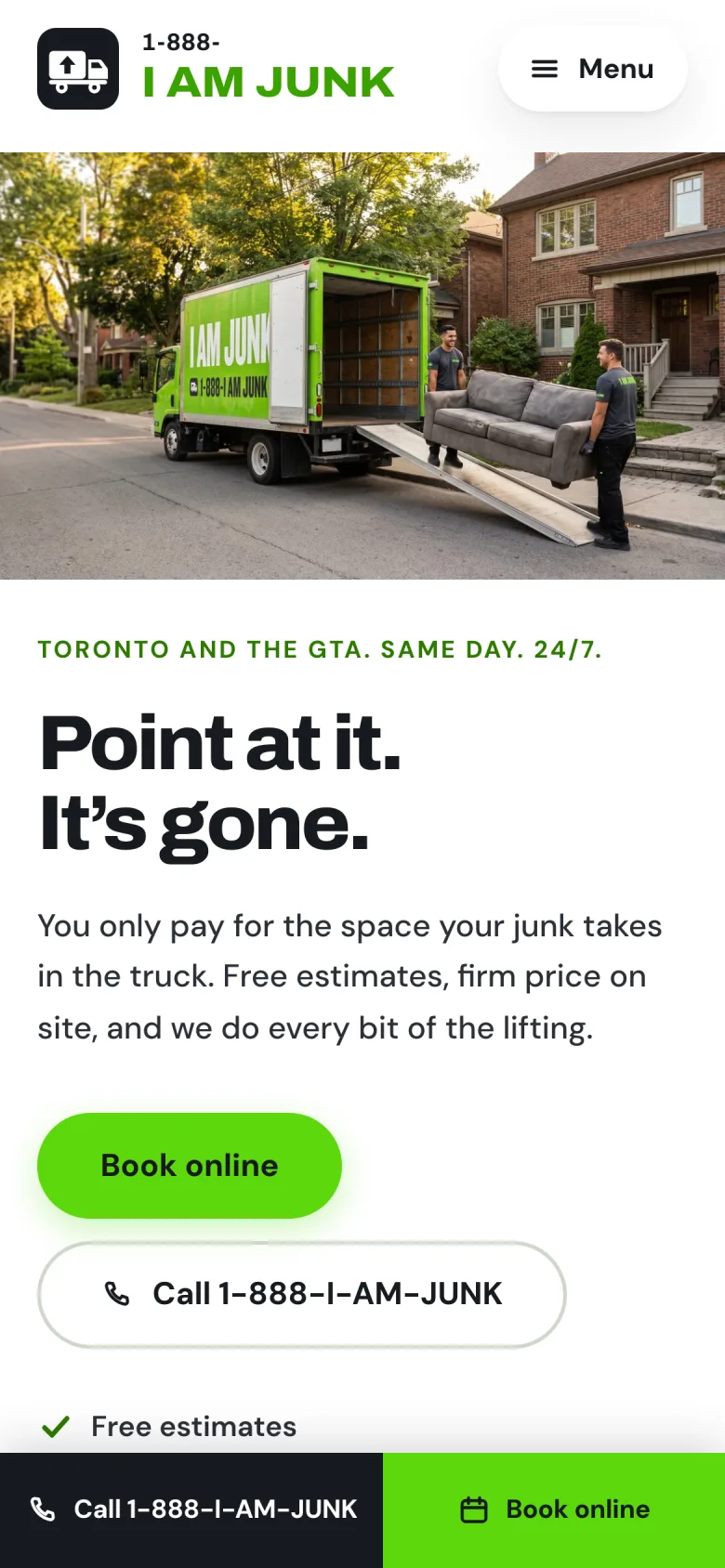
- A sticky call and book bar on mobile, and a pricing page that names every fee
Worth noticing
The estimator is the sales call, taken on the customer’s own time.
The slider is the whole argument. Somebody clearing a basement does not know what a cubic yard is, so the control never asks. It draws the truck, fills it as the slider moves, and says in words roughly what that much space holds. Price, volume and description change together, and every change is announced to a screen reader rather than only drawn.
Then it stops being a toy. The tier follows the visitor to the booking page, arrives already selected, and sits in a card beside the form so nobody has to remember what the truck said. The pricing logic underneath carries ninety tests, because a number on a page is a promise.
Want one of these?
Tell us about your project and we come back with your exact number.
Get in touch ↗