Google and AI answers
How do you show up in the Google Maps 3-pack in your city?
Google says relevance, distance, and prominence decide the Google Maps 3-pack. Here is what you can move, what you cannot, and the order to fix them in.

The Maps 3-pack is sorted on three published things: relevance, distance, and prominence. Two of the three are yours to move. The third, distance, is decided by where the customer is standing when they search.
Nobody can promise you one of those three slots. Google is blunt about it: "There's no way to request or pay for a better local ranking on Google" (Google Business Profile Help, retrieved 2026-09-15). Any agency that guarantees a position is selling something Google says does not exist.
This guide covers what each of the three factors is, what actually moves the two you control, and the order to work through them. It pairs with the wider guide to how a local business shows up on Google and in AI answers.
The short version
- Local packs appeared on 93% of local-intent searches, while AI Overviews appeared on only 15% of them (Whitespark, May 2025).
- Google names three factors: relevance, distance, and prominence (Google Business Profile Help, retrieved 2026-09-15).
- Your primary category is the single highest-rated ranking factor in the 2026 expert survey, ahead of proximity (Whitespark, November 2025).
- 74% of consumers look for reviews written in the last 3 months (BrightLocal, February 2026).
- 78% of Canadian small businesses have a website, but only 52% actively use Google Business Profile or Maps (CFIB, December 2025).
The 3-pack is still where local searches land
For the queries your customers actually type, the map still wins the screen. Local packs appeared on 93% of local-intent searches in a 540-query study (Whitespark, May 2025). That study covered Houston, Phoenix, and Denver, across plumbers, dentists, optometrists, clinics, lawyers, and real estate agents.
AI Overviews showed on only 15% of those same local-intent searches, and on 92% of informational ones (Whitespark, May 2025). The pattern is close to an inverse: AI answers took the research questions, the map kept the hiring questions.
So "emergency plumber Hamilton" behaves differently from "how does a sump pump work". The first one is a map result. That is the one that turns into a phone call.
Google names three factors, and you control two
Relevance and prominence are work. Distance is geography. Google publishes plain definitions of all three, so there is no need to guess at the mechanism.
| Factor | What Google says it is | What you can actually change |
|---|---|---|
| Relevance | "Relevance is how well a Business Profile matches what someone is searching for." | Primary category, services list, description, and the page on your site the profile points at |
| Distance | "Distance refers to how far each business is from the customer who's searching." | Your listed address and your service areas. Not the searcher's position |
| Prominence | "Prominence means how well-known a business is. Prominent places are more likely to show up in search results." | Reviews, mentions of your business elsewhere, and a website Google can read |
All three definitions are quoted from Google Business Profile Help, retrieved 2026-09-15.
Your profile is built from more than what you type into the dashboard. Google compiles "publicly-available information, such as crawled web content", licensed third-party data, and user contributions (Google Business Profile Help, retrieved 2026-09-15). Your own site is part of the input.
Your primary category is the biggest free change you can make
Pick the one category that names what you sell, not the one that sounds biggest. In the 2026 Local Search Ranking Factors survey, 47 practitioners scored 187 possible factors (Whitespark, November 2025). They rated the primary Google Business Profile (GBP) category the strongest local pack factor of all, at 227.
Proximity of the address to the searcher came second at 225. "Business is open at the time of search" came fifth at 189 (Whitespark, November 2025). This is expert consensus, not Google documentation, so read it as the best available map of what practitioners observe.
The practical version: a roofer whose primary category is "Contractor" is competing in a category nobody searches. Change it to "Roofing contractor" and add the rest as secondary categories.
Distance is the one thing you cannot argue with
The pack holds three slots, and proximity does a lot of the sorting. A customer two neighbourhoods over gets a different three than the customer outside your shop, and neither result is broken.
That is why the same business appears in the pack from one postal code and vanishes from the next. Chasing it with a fake address is the fastest way to lose the profile entirely.
What you can set honestly is your service area. Google allows up to 20 of them. The published boundary: no more "than about 2 hours of driving time from where your business is based" (Google Business Profile Help, retrieved 2026-09-15). Listing an entire province is not a strategy.

If you run out of a home address, Google is explicit: "If you're a service-area business, you should hide your business address from customers" (Google Business Profile Help, retrieved 2026-09-15). Hiding it is the compliant setting, not a penalty.
Do not put your city and service in the business name
Use the name on your truck, your invoices, and your door. Nothing else.
Keyword-stuffed names do correlate with rankings, which is why the practice persists. The 2026 survey put "keywords in the GBP business title" third at 223 (Whitespark, November 2025). The rules say the opposite, and Google owns the profile.
"Including unnecessary information in your business name isn't permitted, and could result in the suspension of your Business Profile" (Google Business Profile Help, retrieved 2026-09-15).
| Business name | Status |
|---|---|
| Pike Roofing | Fine. It is the registered name |
| Pike Roofing Inc. | Fine. Legal suffixes are part of the name |
| Pike Roofing Hamilton | Risky. The city is a location descriptor |
| Pike Roofing Emergency Repairs Hamilton 24/7 | Suspension risk. Taglines, services, hours, and a city |
Enforcement is automated, and it is running at a scale where a suspension is not a rare accident. In 2025 the platform removed over 13 million fake Business Profiles and blocked or removed over 292 million policy-violating reviews. It also restricted more than 782,000 policy-violating accounts (Google, April 2026).
Reviews are the prominence signal you can actually move
Reviews are the part of prominence that responds to work this month rather than this year. The number matters less than the flow.
74% of consumers look for reviews written in the last 3 months, and 47% will not use a business with fewer than 20 reviews (BrightLocal Local Consumer Review Survey, February 2026).
The same survey found 97% of consumers read reviews for local businesses, and 31% will only use a business rated 4.5 stars or higher (BrightLocal, February 2026). A wall of 5-star reviews from two years ago reads as a business that stopped trading.
So the target is a steady trickle. Ask every customer at the moment the job is finished, and reply to each review. Do not buy them, for the reason in the enforcement numbers above.
Hours are a ranking factor that most owners let rot
Set real hours, including holiday hours, because a business listed as closed can drop out of the pack at the moment someone needs it. Practitioners rated "business is open at the time of search" the fifth strongest factor at 189 (Whitespark, November 2025).
This is a 5-minute job twice a year and almost nobody does it. If you take emergency calls at 2am, say so in the hours, not only in the description.
Verification is the gate in front of all of this. Google says reviews of a verification request "take up to 5 business days" (Google Business Profile Help, retrieved 2026-09-15). The full walkthrough is in our guide to setting up a Google Business Profile in Canada.
One page per city you serve, on your own site
Build one real page per city you serve, with that city's jobs, prices, and photos on it. Your profile is not the only thing the crawler reads. A single "Areas we serve" page listing 30 towns does nothing for any of them.
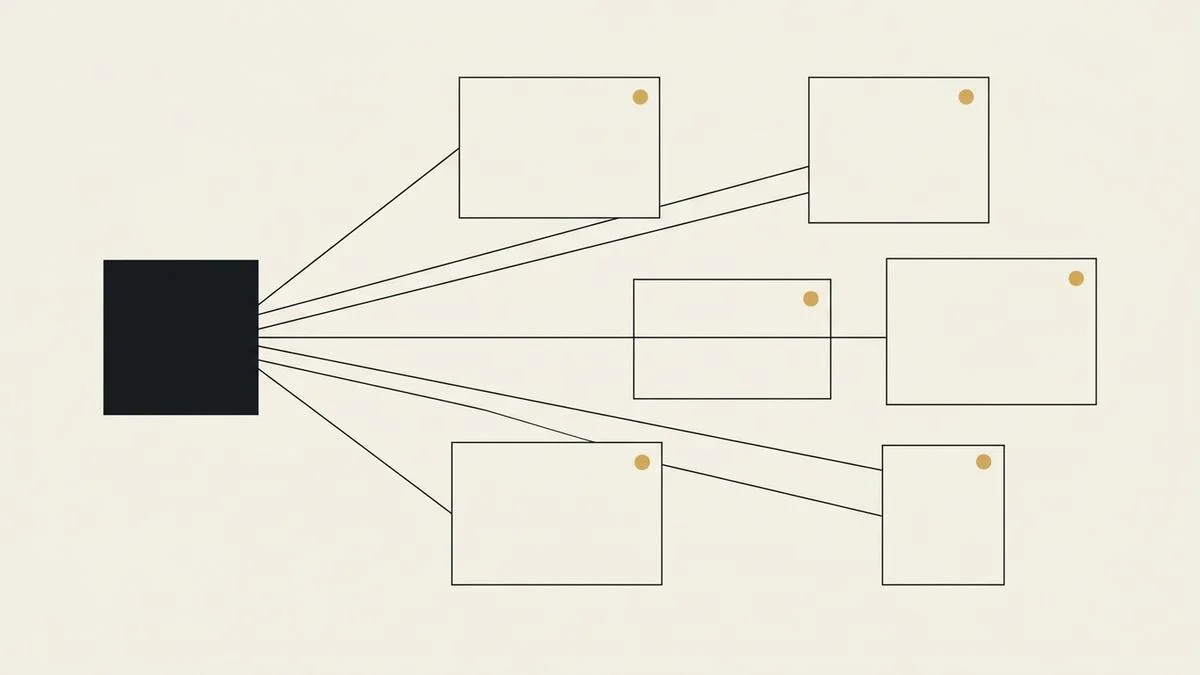
That is the structure behind our own city pages, one URL per market rather than one list:
- Ontario: Toronto, Ottawa, and Hamilton
- Québec: Montréal and Québec City, each with a French twin at Conception Web à Montréal and Conception Web à Québec
- Western Canada: Vancouver, Calgary, Edmonton, and Winnipeg
- Atlantic Canada: Halifax
Each page carries its own services, its own examples, and its own contact path. Finished builds by category are on the portfolio.
What this costs, and who should do it
Everything above is free to do yourself. It costs a few hours to set up. Keeping it takes roughly 20 minutes a week: reviews asked for, questions answered, hours correct, photos added.
Samro Studios runs it as a monthly add-on for owners who would rather not. SEO/AEO Management is $79 CAD a month, with no commitment, and attaches to any plan. It covers search and AI-answer visibility, Google Business Profile management, and live performance metrics in your client portal.
| What you need | What it costs |
|---|---|
| Doing the profile work yourself | Free, about 20 minutes a week |
| Handing the profile work over | SEO/AEO Management, $79 CAD a month, no commitment |
| A hand-coded site behind the profile | $895 to $1,795 CAD one time, plus $20 to $40 CAD a month for hosting and support starting 30 days after payment |
| The same build spread out | From $99 CAD a month on a subscription |
Most builds go live in 2 to 3 weeks, and a redesign costs the same as a new build.
Frequently asked questions
How long does it take to show up in the Google Maps 3-pack?
There is no published timeline, and no honest way to promise one. Verification alone takes up to 5 business days (Google, retrieved 2026-09-15). After that, category and hours changes register quickly. Review volume and the rest of prominence build over months, and proximity never stops working against you outside your own area.
Can I pay Google to rank higher on Maps?
No. Google states "there's no way to request or pay for a better local ranking on Google" (Google Business Profile Help, retrieved 2026-09-15). Google Ads can place you above the pack as a paid result. That is advertising, clearly labelled, and it does not change the organic three.
Why do I show up in one neighbourhood but not the next one over?
Because distance is measured from the searcher, not from you. Google defines it as "how far each business is from the customer who's searching", so the three results change as the customer moves. Proximity was rated the second strongest local pack factor of 187 tested (Whitespark, November 2025).
Should I add my city to my Google business name?
No. Google says unnecessary information in the name "could result in the suspension of your Business Profile" (Google Business Profile Help, retrieved 2026-09-15). Competitors who do it may show up for a while. Report them through the Business Redressal Complaint Form instead of copying them.
How many Google reviews do I need?
Aim past 20 first. 47% of consumers will not use a business with fewer than 20 reviews, and 74% look for reviews written in the last 3 months (BrightLocal, February 2026). After that, recency matters more than the running total, so keep asking rather than stopping at a milestone.
Do I still need a website if I have a Google Business Profile?
Yes. Profiles are built partly from "crawled web content" from your official site, so the site feeds the profile. In a survey of 2,478 Canadian owners, 78% had a company website while 52% actively used Google Business Profile or Maps (CFIB, December 2025).
What to do this week
Work the list in this order. Each step is free, and the first four take an evening.
- Verify the profile, and allow up to 5 business days for the review.
- Set one primary category that names what you sell.
- Set real hours, including holiday hours.
- Strip any city, service, or tagline out of the business name.
- Ask every finished job for a review, and reply to each one.
If the website under it needs rebuilding first, tell us about the project on the contact form. You get an exact figure back, not a range.
Sami Bdeira is the founder of Samro Studios, a Montréal studio that hand-codes bilingual websites and builds AI phone agents for Canadian service businesses.